
It is 9:15 on a Thursday morning. Arjun, founder of a B2B SaaS platform that closed its Series A eight months ago, is sitting across from his lead investor in a glass-walled conference room. The coffee between them has gone cold. The slide on the screen shows a product roadmap — colour-coded, meticulously sequenced, every feature checked off.Checked off. Every single one.The investor leans forward. "The roadmap is complete. The team delivered. So why is activation* still at 31%?"For Arjun's platform, that moment was a user completing their first automated workflow. 31% meant: out of every hundred new signups, sixty-nine were leaving before they ever experienced what the product was actually built to do.
Arjun has data. He has delivery records. He has a team that worked weekends and hit every sprint. What he does not have is a reason why a product that did everything it promised is failing to keep the users it attracts.The room goes quiet. The kind of quiet that makes a Series B feel very far away.(*What "activation" means in this context: Activation is the moment a new user completes the core action that proves they have found the product's value — the "aha moment." For a fintech app it might be connecting a bank account. For a project tool it might be creating and assigning the first task. The activation rate is the percentage of new signups who reach that moment. 31% → 58% in the article means: out of every 100 new users, 31 were completing that defining action before the redesign, 58 after)
The Wrong Question Everyone Keeps Asking
Understanding the basics of AI is the first step. AI encompasses various technologies, including machine learning,natural language processing, and computer vision. These technologies enable systems to learn from data,recognize patterns, and make decisions with minimal human intervention. Familiarize yourself with thesetechnologies and how they can be applied to your product. This fundamental step is really important to build yourAI empathy.
The roadmap was never the problem. The sequence was.
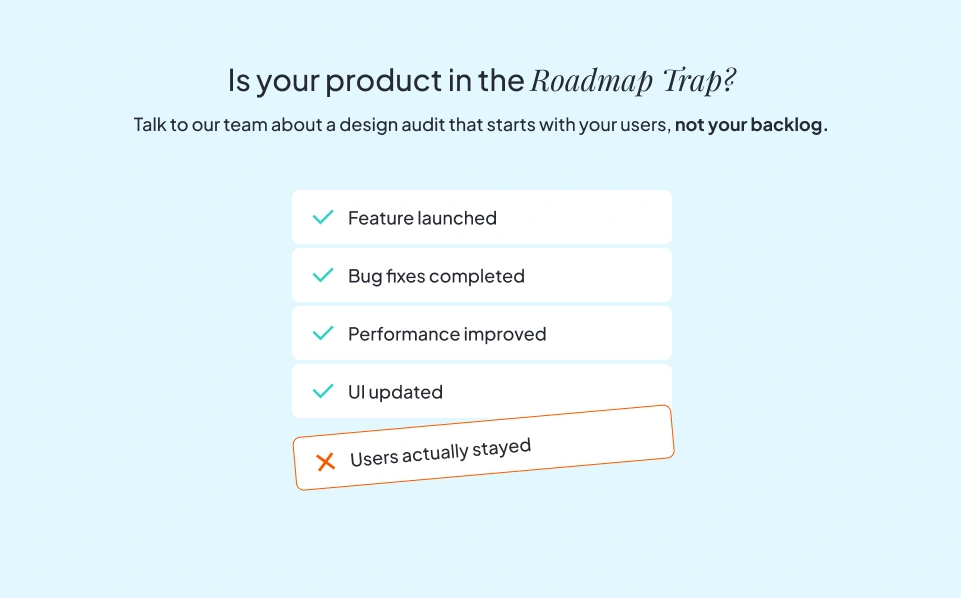
Every item Arjun's team built was defensible. Users had asked for it. Investors had approved it. The logic, line by line, was sound. But logic applied in the wrong order produces outcomes that make no sense — like a chef who cooks every component of a meal to perfection and then serves the dessert first and the appetiser last. Each dish is flawless. The experience is incoherent.This is the Roadmap Trap: the belief that a completed list of correct features equals a product that works. It almost never does. Because users do not experience features. They experience sequences. And sequence is a design problem — one that most product teams have never been taught to name, let alone solve.
Three Invisible Cracks in the Foundation
Trap 1 — The Confidence Illusion
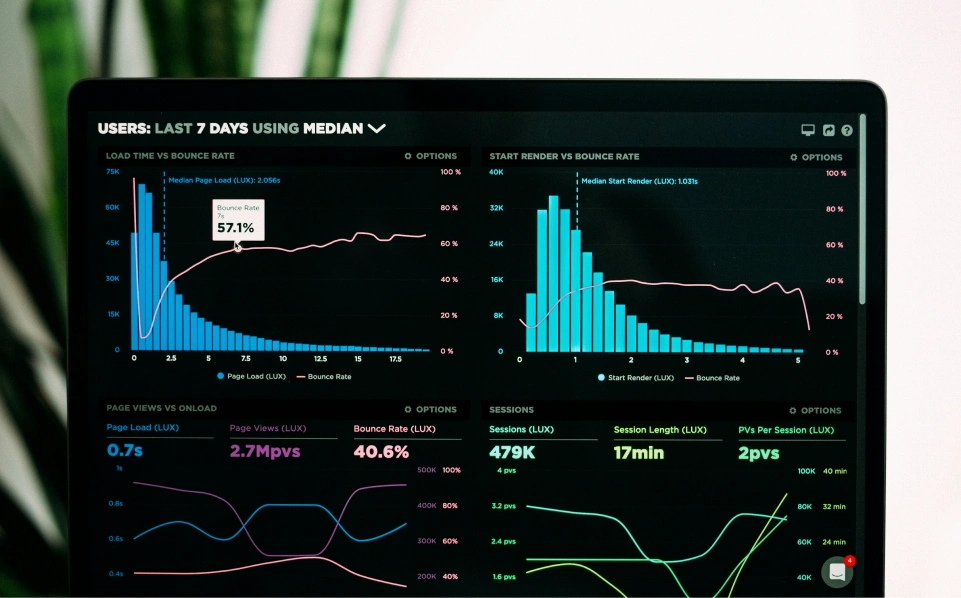
Vikram is head of product at a fintech startup. His team spent four months building a powerful portfolio analytics dashboard — the feature their most vocal users had been requesting since beta. The build was clean. The visualisations were sharp. On launch day, usage spiked. Two weeks later, it had flatlined.The dashboard was not wrong. It was premature.The users who asked for it were power users — the ones who had already internalised the core workflow and were ready for depth. The majority of users were still stuck at a completely different problem: they had not connected their accounts correctly, had not understood what the baseline numbers meant, had not yet formed the habit of returning to the product. They were offered a reason to go deeper before they had a reason to stay.Vikram's team had listened to the loudest voices and confused volume for signal. A research-led design process would have surfaced this in week two of discovery — not week fourteen of development. Qualitative interviews with the silent majority, the users who were not writing in, not posting in forums, simply leaving, would have revealed a completely different priority sequence.
The most dangerous feedback in product development is the feedback you receive with total confidence.
Power users speak clearly and specifically. They make roadmaps feel obvious. But the product's survival depends on the users who never write in — the ones who tried, found one moment of confusion, and quietly closed the app. Build for the silent user first. The vocal one will wait.Audit your roadmap sources. For every feature on your next sprint, ask: who asked for this, and how representative is that voice of the user your retention depends on?
Trap 2 — The Momentum Mirage
Priya is a product leader at a B2B operations platform. Her product had strong initial traction. New accounts were signing. NPS from onboarded users was healthy at 52. So the team accelerated — more integrations, a mobile app, a workflow builder that enterprise prospects had specifically requested in sales calls.Eighteen months later, churn was climbing. Not sharply. Gradually, steadily, in the way that does not trigger alarms until it is already structural.When Priya's team finally ran a proper exit survey and mapped it against behavioural data, the pattern was clear. Users who churned had almost never reached the workflow builder. They had left at a much earlier moment — a specific friction point in week two that the team had classified as a minor UX issue and deprioritised in favour of the enterprise feature build. The churn was not caused by the absence of features. It was caused by the presence of friction that the team had chosen to defer.
Momentum is not the same as traction. One is speed. The other is grip.
The Momentum Mirage is the product equivalent of a plane that is climbing beautifully while quietly losing fuel. New feature adoption looks like health. It is not. Real traction is the percentage of users who find the core value of the product on their own, without being guided, within the first two sessions.Map the dropout moments before you map the next feature. Understand where users stop before you build where you want them to go.
Trap 3 — The Architecture Blindspot

Rohan is the CTO of a Series B SaaS company whose enterprise pilot went well. The client signed. Six months into expansion, usage across departments was lower than projected. The product worked. The integrations held. But the enterprise team was not using it the way the pilot team had.The reason was invisible in the codebase and invisible in the design files. It was structural. The product had been architected around a single user persona — the operations manager who had been the champion in the pilot. Every navigation choice, every default setting, every onboarding prompt was built assuming that user's context, vocabulary, and workflow. In the expansion, the product met different personas: procurement leads, department heads, data analysts. The product was not wrong for them. It was built without them in mind — and the cognitive load of translating it to their context was enough to quietly suppress adoption.The Architecture Blindspot is what happens when the first design is built on an implicit, undocumented user model that gets inherited by every subsequent build. Nobody chose to exclude other personas. Nobody even noticed the assumption was there. But an assumption baked into an architecture at the beginning compounds with every sprint that follows it.
Before scoping your next major build, name every persona your product currently serves and every persona it needs to serve in the next eighteen months. Then audit whether your current architecture serves all of them — or only the one who was in the room when the product was first designed.
Back to the Conference Room
Six months after that quiet Thursday morning, Arjun is back in the same glass-walled room. The slide on screen this time is not a roadmap. It is a user journey map — annotated with dropout moments, friction scores, and persona annotations that his team built during a research sprint before the next development cycle began.
Activation is at 58%. The feature count has not changed significantly. The sequence has.
His investor does not ask what was built. She asks who designed the journey. Arjun has an answer.
About Prismic Reflections®

Prismic Reflections® is a principal-led strategic design studio with over two decades of experience partnering with founders, SaaS product leaders, and enterprise innovation teams. We work at the intersection of human research, business strategy, and design craft — helping ambitious companies build products that grow because they were designed to, not despite how they were built. Our work spans more than twenty industries, and every engagement begins with the same question: what does the silent user need that the loudest voice in the room has not yet said?
→ Start the conversation at prismicreflections.com